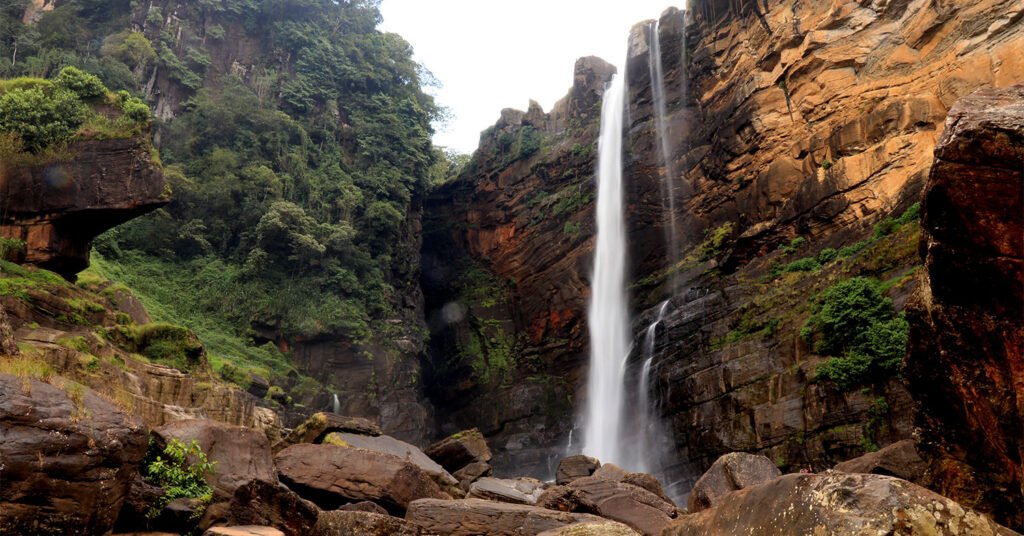
If you’re dreaming of misty mountains, secret forest trails, and the sound of crashing water echoing through the hills, Bambarakanda Falls should be on your Sri Lanka travel bucket list. Standing tall at 263 meters, it’s the highest waterfall in the country—a jaw-dropping natural wonder hidden in the peaceful village of Kalupahana. Whether you’re planning a scenic Bambarakanda hike, a quiet weekend of bambarakanda camping, or just want to see the legendary bambarakanda water fall up close, this place offers more than just a photo op. From the thrill of the Devil’s Staircase to serene paths through pine forests, getting here is half the adventure. Wondering how to go to babarakanda falls from Colombo, Ella, or Nuwara Eliya? We’ve got you covered. Let’s dive into everything you need to know to explore this hidden gem like a true traveler.
Where Is Bambarakanda Falls Located?
Kalupahana – The Gateway to Bambarakanda
Bambarakanda Falls is tucked away in the tranquil village of Kalupahana, in the Badulla District of Sri Lanka’s central highlands. This hidden treasure lies just off the Balangoda–Badulla A4 road, surrounded by pine forests, misty hills, and quiet villages. Kalupahana acts as the main access point to the falls, making it the perfect base for your adventure.
From Kalupahana town, a narrow but scenic road stretches about 5 km uphill toward the falls. Along the way, you’ll pass through rural landscapes and lush greenery that offer a preview of the serenity to come. Due to the steep and bumpy terrain, many travelers prefer to leave their vehicles at the base and take a tuk tuk (usually around 2000 LKR for a round trip), which not only makes the ride smoother but also adds a touch of local charm to the journey.
How to Go to Bambarakanda Falls from Major Cities
Getting to Bambarakanda Falls is part of the experience. Whether you’re coming from bustling Colombo or the peaceful hill towns, the journey promises scenic views and unforgettable moments.
Colombo to Bambarakanda Falls
- Distance: Approx. 190 km
- Travel Time: 5 to 6 hours by car
- Route: Take the A4 road via Ratnapura → Balangoda → Kalupahana
- Tips: Leave early to avoid city traffic. A personal vehicle or private hire is ideal for comfort and flexibility.
Ella to Bambaraknda Falls
- Distance: Approx. 43 km
- Travel Time: 1.5 to 2 hours by car or tuk tuk
- Route: Travel via Bandarawela and Haputale, then head towards Kalupahana on the A4
- Highlights: Enjoy one of the most scenic drives in the highlands, with panoramic views and tea plantations.
Nuwara Eliya to Bambarakanda
- Distance: Approx. 75 km
- Travel Time: Around 2.5 to 3 hours
- Route: Take the B492 to Welimada → Haputale → Kalupahana via the A4
- Note: Roads are narrow but picturesque, passing through local villages and hilly landscapes.
Galle to Bambarakanda
- Distance: Approx. 210 km
- Travel Time: 6 to 7 hours
- Route: Follow the Southern Expressway to Ratnapura, then join the A4 route to Kalupahana
- Tip: This is a long drive, so plan for rest stops or consider staying overnight in nearby towns like Haputale or Belihul Oya.
How to Reach the Entrance of Bambarakanda Falls
Best Travel Options: Tuk Tuk vs Personal Vehicle
Reaching Bambarakanda Falls is an adventure in itself, with the last few kilometers offering stunning views and rustic charm. From Kalupahana, the road leading to the falls stretches around 5 kilometers uphill, winding through forested terrain and tea-covered hills.
You have two main travel options:
1. Tuk Tuk:
- Ideal for the final steep and narrow stretch
- Costs around LKR 2000 round trip
- Drivers usually wait at the top and take you back
- Adds a local touch to your journey and avoids vehicle stress
2. Personal Vehicle:
- Works if your vehicle has high ground clearance
- Four-wheel drive is recommended for rough patches
- Vans or SUVs can usually handle the climb
- Be cautious—road is narrow with potholes and erosion in some areas
If you’re unfamiliar with mountain driving or prefer to relax, hiring a tuk tuk from the base is highly recommended. It’s affordable, safe, and makes the ride more enjoyable.
Entrance Fee, Ticketing, and Walking Trails
Once you reach the top parking area, you’ll find the official entrance to Bambarakanda Falls. Here’s what you need to know:
- Entrance Fee: LKR 350 per person (as of the latest update)
- Ticket Counter: Located at the start of the walking path
- Trail Length: About 500 meters from the gate to the base of the falls
- Trail Type: Easy to moderate, passing through a shaded pine forest
The short walk is peaceful and scenic, with the sound of the waterfall growing louder as you get closer. There’s also a 2-kilometer trail deeper into the forest that leads to a smaller, lesser-known waterfall—perfect for those looking to explore beyond the main site.
Navigating the Narrow Road (4WD or High Clearance Required)
The final stretch of road to Bambarakanda Falls is narrow, winding, and in rough condition. Here’s what to expect:
- Road Type: Mostly unpaved with loose gravel, potholes, and some steep inclines
- Recommended Vehicle: 4WD or high-clearance vehicles are best
- Alternative: Park near the bottom of the hill and take a tuk tuk for safety and ease
Driving this road can be tricky, especially during the rainy season when the surface becomes slippery. If you’re not confident behind the wheel in such conditions, it’s better to avoid the stress and enjoy the ride in a locally driven tuk tuk.
Whether you’re planning a quick stop or a full day of exploring, getting to Bambarakanda Falls is well worth the effort. The journey itself off
Why Bambarakanda Falls Is Worth Visiting
Tallest Waterfall in Sri Lanka (263m)
Bambarakanda Falls isn’t just another waterfall—it holds the crown as Sri Lanka’s tallest, plunging from a dramatic height of 263 meters. Fed by the Kuda Oya, a tributary of the Walawe River, the water cascades in a single, uninterrupted drop from the rugged Uduweriya Haputale mountain range.
What makes this fall truly special is its sleek vertical plunge. Unlike tiered waterfalls, Bambarakanda falls as a thin ribbon of white against a dark rock face, creating a powerful and mesmerizing sight. During the monsoon months, the roar is deafening, the mist is magical, and the scenery is at its lushest.
For travelers seeking awe-inspiring natural landmarks, this is one you simply can’t miss.
A Hidden Natural Wonder
Despite its record-breaking height, Bambarakanda Falls remains one of Sri Lanka’s best-kept secrets. Tucked away near the remote village of Kalupahana, this waterfall lies off the typical tourist trail—making it feel like a true discovery.
Reaching it requires a short, scenic walk through a pine forest, adding to the feeling that you’re venturing into the wild. As you approach, the sound of rushing water builds anticipation until the falls reveal themselves through the trees. It’s dramatic, raw, and refreshingly untouched.
For those who love the idea of chasing waterfalls away from the crowds, Bambarakanda offers the thrill of a hidden gem.
Peaceful, Crowd-Free Atmosphere
Unlike the more commercialized waterfalls around the island, Bambarakanda maintains a calm and peaceful vibe. Even during peak seasons, you won’t find the large tourist groups that crowd other scenic spots.
The air is cool and fresh, the forest path is quiet, and the atmosphere invites you to pause, breathe, and simply enjoy. Whether you’re planning a picnic, a photo session, or just a peaceful moment with nature, this spot delivers.
It’s the kind of place where you can sit on a rock, listen to birdsong, watch butterflies drift by, and feel completely disconnected from the chaos of everyday life. For solo travelers, couples, or families seeking tranquility, Bambarakanda Falls is a perfect escape.
Things to Do at Bambarakanda Falls
Bambarakanda Hike – Trails and Viewpoints
For outdoor lovers, the Bambarakanda hike offers more than just a walk—it’s a journey through pine forests, mountain ridges, and serene landscapes. The main trail to the waterfall is about 500 meters, shaded by tall pines and leading directly to a viewing area near the base.
But the real adventure begins if you choose to hike beyond. The trail leading up behind the waterfall rewards you with panoramic viewpoints of the surrounding hills and valleys. From up top, you’ll get a bird’s-eye view of the dramatic drop of Bambarakanda Falls, the winding roads below, and the mist-covered forests in the distance.
If you’re an experienced hiker, you can even connect this trail to the Devil’s Staircase—a thrilling, steep route that links Ohiya to Kalupahana, known for its switchbacks and wild terrain.
Bambarakanda Camping – A Nature Lover’s Dream
Camping at Bambarakanda Falls is a magical experience for those who want to be fully immersed in nature. With cool mountain air, starlit skies, and the sound of rushing water in the background, it’s the perfect place to disconnect and unwind.
There are basic flat areas near the trail where travelers often pitch tents. If you’re planning to camp, it’s best to bring your own gear, and check with locals or guides for the safest and most scenic spots.
Many travelers combine babarakanda camping ohiya with multi-day treks, enjoying both the peaceful atmosphere of the falls and the cooler highlands around Ohiya.
Quick Tips for Campers:
- Bring warm clothes—it gets chilly at night
- Pack out all your waste and leave no trace
- A small campfire may be possible, but always check fire regulations
Photography, Birdwatching, and Nature Walks
If you’re not into hardcore trekking or camping, don’t worry—Bambarakanda Falls still has plenty to offer. The area is a photographer’s paradise, with dramatic angles of the falls, ever-changing light, and misty surroundings that feel straight out of a dream.
Birdwatching is another peaceful activity here. The region is home to a variety of endemic birds like the Sri Lanka White-eye, Yellow-eared Bulbul, and Spurfowl. Early mornings are ideal for spotting them flitting among the trees.
The easy paths and forest trails also make for perfect nature walks. Whether you’re observing butterflies, soaking in the stillness, or simply enjoying the forest scent, every step here feels calming and refreshing.
Nearby Smaller Waterfall (2km Trail)
Just beyond the main falls, a 2-kilometer forest trail leads to a smaller, lesser-known waterfall that many travelers miss. This hidden gem is ideal for those seeking a bit of solitude and adventure beyond the main path.
The trail is relatively easy and winds through more remote areas of the forest. At the end, you’ll find a peaceful cascade, surrounded by rocks and trees—perfect for a quiet picnic or just resting your legs after a morning of exploring.
If you’re up for a full-day adventure, combine this with the hike to the Devil’s Staircase or extend your route towards Ohiya through the highland trails.
Best Time to Visit Bambarakanda Falls
Monsoon Season (May to September)
The best time to visit Bambarakanda Falls is during the monsoon season, between May and September. During these months, the waterfall is at its fullest, creating a powerful, thunderous cascade that’s truly breathtaking to witness.
The surrounding landscape also transforms into a lush, green paradise. Mist clings to the treetops, the air is cool and fresh, and the forest comes alive with the sounds of nature. It’s the perfect time for photographers, hikers, and anyone who wants to see Bambarakanda in its most dramatic form.
However, if you prefer drier trails and lighter rainfall, consider visiting at the start or end of the season—around May or late September.
Weather Conditions and Travel Tips
Bambarakanda is located in the central highlands, so the weather here can be unpredictable, especially during the rainy season. Mornings are usually clear, with rain often rolling in by afternoon.
Here are a few key weather-related tips to keep in mind:
- Expect sudden showers – Always carry a lightweight raincoat or umbrella
- Mornings are best – For clear skies, wildlife sightings, and fewer crowds
- Roads may be slippery – Especially on the final stretch to the falls; drive carefully
- Cool temperatures – Even in warmer months, the highlands can get chilly
If you’re camping or hiking, check the local weather forecast in advance and plan your trip accordingly.
What to Pack for Your Visit
Packing smart will make your trip to Bambarakanda Falls more comfortable and enjoyable. Here’s a quick checklist of essentials:
- Comfortable hiking shoes – With good grip for wet or uneven paths
- Rain jacket or poncho – Essential during monsoon months
- Water and snacks – Few shops near the trail, so come prepared
- Camera or smartphone – The scenery is too good not to capture
- Binoculars – Great for spotting birds and scenic viewpoints
- Extra clothes – In case you get wet or plan to swim
- Sunscreen and insect repellent – Especially if you’re staying outdoors for long
Whether you’re visiting for a quick photo stop or an all-day trek, being well-prepared helps you enjoy Bambarakanda Waterfall safely and stress-free.
Flora and Fauna Around Bambarakanda Falls
Unique Trees, Plants, and Wildflowers
The area surrounding Bambarakanda Falls is rich with vibrant greenery and diverse plant life. As you walk along the trail to the waterfall, you’ll pass through a cool pine forest, offering a refreshing scent and shade throughout your journey.
Look closer, and you’ll notice a mix of native ferns, moss-covered rocks, and colorful wildflowers blooming along the path. During the wetter months, the forest floor becomes a lush carpet of green, dotted with bright yellow, purple, and white blossoms.
You might also come across eucalyptus trees and unique highland shrubs that thrive in this cooler, misty climate. These plants not only enhance the scenery but also support the delicate ecosystem around the waterfall.
Birdwatching Highlights – Endemic Species
Bambarakanda Falls is a dream destination for birdwatchers. The forested region is home to a variety of endemic and migratory bird species, making it an excellent spot to pause, listen, and observe.
Some commonly spotted birds include:
- Yellow-eared Bulbul – A cheerful songbird found only in Sri Lanka
- Sri Lanka White-eye – Small, bright-eyed birds that flit in flocks through the trees
- Sri Lanka Spurfowl – Shy, ground-dwelling birds often heard more than seen
- Eagles and Hawks – Occasionally soaring high above the treetops
Early mornings are the best time for birdwatching, when the forest is alive with chirps, songs, and gentle wingbeats.
Small Mammals and Insects in the Region
Beyond the birds and plants, Bambarakanda’s ecosystem supports a variety of small creatures that bring the forest to life.
If you’re lucky, you might spot:
- Toque macaques and purple-faced langurs – Playful monkeys often seen in nearby trees
- Squirrels – Both striped palm squirrels and larger giant squirrels
- Butterflies – Colorful species fluttering around wildflowers and sunlit patches
- Dragonflies and damselflies – Especially near water streams and damp areas
While large animals are rare in the area, these small mammals and insects play a vital role in maintaining the biodiversity of this highland region.
Accommodation Near Bambarakanda Falls
Guesthouses and Lodges in Kalupahana and Haldummulla
If you’re looking to stay close to Bambarakanda Falls, the nearby villages of Kalupahana and Haldummulla offer simple, budget-friendly accommodation options. These include small guesthouses, eco-lodges, and homestays that provide warm hospitality and stunning mountain views.
Most of these accommodations offer:
- Basic rooms with clean amenities
- Home-cooked Sri Lankan meals
- Easy access to the falls (within 15–20 minutes)
- Quiet, nature-filled surroundings
Since these are locally-run properties, it’s a good idea to book in advance, especially during peak travel months. Staying in the area allows you to explore the waterfall early in the morning or stay late to catch the golden hour light.
Camping Tips and What to Bring
Camping near Bambarakanda Falls is a rewarding experience for adventure lovers. With cool weather, scenic backdrops, and the soothing sound of water, it’s the perfect setting for a peaceful night under the stars.
Before you go, keep these camping tips in mind:
What to Bring:
- A waterproof tent with strong pegs (ground can be rocky)
- Sleeping bag or warm blankets – nights get cold
- Headlamp or torchlight – there’s no artificial lighting nearby
- Portable stove or ready-made meals – food options are limited
- Drinking water and garbage bags – leave no trace
- Warm clothes and rain gear – mountain weather can change fast
Check with local authorities or guides for the best camping spots and current safety guidelines. It’s best to camp near designated flat areas along the trail rather than at the base of the falls due to slippery rocks and changing water levels.
Staying in Ella or Haputale for a Day Trip
Prefer more comfort or amenities? You can still visit Bambarakanda Falls on a day trip from Ella or Haputale—both popular towns for travelers exploring Sri Lanka’s hill country.
Distance from Bambarakanda Falls:
- Ella: approx. 1.5 hours (43 km)
- Haputale: approx. 45 minutes (21 km)
These towns offer a wider range of accommodations:
- Budget hostels and guesthouses
- Boutique hotels with scenic views
- Luxury eco-resorts and wellness retreats
Staying in Ella or Haputale also gives you access to other attractions like Little Adam’
Nearby Attractions to Visit
Devil’s Staircase – A Thrilling Drive or Hike
If you’re craving a bit of adrenaline after visiting Bambarakanda Falls, don’t miss the Devil’s Staircase. This rugged, zigzagging mountain road is famous for its sharp hairpin bends and breathtaking views. Whether you’re hiking or taking a 4WD vehicle, the route offers a thrilling adventure through remote tea estates and misty mountain terrain.
The trail runs between Ohiya and Kalupahana, making it a natural extension of your visit to Bambarakanda. Along the way, you’ll pass streams, cliffs, and sweeping valley vistas—perfect for photographers and off-road enthusiasts alike.
Horton Plains National Park
A short drive from the falls, Horton Plains is one of Sri Lanka’s most stunning highland reserves. Known for its cool climate, mist-covered plains, and rich biodiversity, the park is home to the famous World’s End cliff, Baker’s Falls, and a variety of endemic wildlife.
It’s an excellent spot for nature lovers looking to explore beyond Bambarakanda. Early morning hikes here are magical, with golden light filtering through the grasslands and forests. Be sure to wear warm clothes—the temperatures can drop significantly.
Belihul Oya and Its Hidden Gems
Located just a short drive from Kalupahana, the village of Belihul Oya offers a peaceful retreat surrounded by rivers, waterfalls, and forest trails. It’s less crowded than many tourist spots, making it ideal for those seeking solitude and connection with nature.
You can explore lesser-known waterfalls, natural rock pools, and walking paths that wind through the greenery. The cool, clean air and gentle river sounds make Belihul Oya a perfect picnic or overnight stop during your visit to Bambarakanda Falls.
Lipton’s Seat and Tea Trails in Haputale
If you’re staying in Haputale, a trip to Lipton’s Seat is a must. This iconic viewpoint, named after tea magnate Sir Thomas Lipton, offers panoramic views over rolling tea fields that stretch as far as the eye can see.
You can hike or take a tuk tuk through the tea trails, passing local plantations and small villages along the way. It’s a great place to learn about Sri Lanka’s tea culture while soaking in breathtaking scenery. Combine this with a visit to Bambarakanda for a full highland experience.
Dunhinda Falls and Badulla’s Cultural Spots
For those venturing toward Badulla, make time to stop at Dunhinda Falls, another of Sri Lanka’s most beautiful waterfalls. Surrounded by lush forest, the falls create a dramatic mist cloud that inspired its name—“Dunhinda” meaning “spraying mist.”
Badulla itself offers a blend of history and charm. Visit the Muthiyangana Raja Maha Vihara, one of the island’s oldest Buddhist temples, or take a walk through the quiet colonial streets of the town.
Travel Tips and Safety Advice
Wear Proper Footwear and Light Clothing
When visiting Bambarakanda Falls, the right clothing makes all the difference. The trail to the waterfall includes uneven paths, damp forest floors, and rocky terrain, especially during the rainy season. Sturdy hiking shoes or sneakers with a good grip are essential to prevent slips and ensure a comfortable walk.
Opt for light, breathable clothing, ideally in layers. The mornings can be cool, but the day tends to warm up quickly. A light rain jacket or poncho is also a smart addition—sudden showers are common in this highland area.
Travel Light and Stay Hydrated
The trail to Bambarakanda Falls is not overly long, but it’s best to travel light so you can move easily and enjoy the hike. Carry just the essentials:
- A reusable water bottle
- A small backpack for snacks, camera, and rain cover
- Basic first aid items like plasters and mosquito repellent
Staying hydrated is especially important if you’re trekking beyond the main waterfall or heading toward Devil’s Staircase or the nearby 2 km trail. While the cool weather might not make you feel thirsty, the elevation and activity can still tire you out.
Hire a Local Guide for Hidden Trails
If you’re planning to explore off the beaten path—such as camping in Ohiya, hiking to hidden waterfalls, or tackling the Devil’s Staircase—consider hiring a local guide. Guides are familiar with the terrain, current weather conditions, and can lead you safely through less-marked routes.
They also share stories about the area’s history, wildlife, and culture, making your visit more immersive and meaningful. It’s a great way to support the local community while staying safe.
Respect Nature and Local Customs
Bambarakanda Falls is more than just a tourist spot—it’s a natural sanctuary and a peaceful part of the local community. To help preserve its beauty and harmony, keep these guidelines in mind:
- Don’t litter – carry your waste back with you
- Avoid loud music or disruptive behavior – enjoy the sounds of nature
- Be mindful when taking photos of locals or their property—always ask first
- Dress modestly if you’re passing through villages or sacred sites
By respecting the environment and local customs, you’ll help ensure that Bambarakanda Waterfall remains a serene and welcoming place for future travelers.
FAQs About Bambarakanda Falls
How do I get to Bambarakanda Falls from Ella or Colombo?
From Ella, Bambarakanda Falls is about 43 km and takes around 1.5 to 2 hours by car or tuk tuk. From Colombo, the distance is roughly 190 km, and the drive takes about 5 to 6 hours via the A4 road through Ratnapura and Balangoda.
Once you reach Kalupahana, continue on the narrow 5 km road toward the falls. A tuk tuk is recommended for the final climb due to rough road conditions.
Can you swim at the base of Bambarakanda Falls
While the base of Bambarakanda Falls forms a natural pool, swimming is not recommended, especially during the rainy season. The water can be deep, cold, and the currents strong. However, it’s still a lovely place to sit near the edge, dip your feet, and enjoy the cool mist.
Is camping allowed at Bambarakanda Falls?
Yes, camping is allowed in designated areas near the trail and forest around the falls. It’s a popular choice for nature lovers and hikers looking for an immersive experience. Be sure to bring your own gear, pack out all waste, and check with locals for the best and safest spots.
What’s the best season to visit Bambarakanda?
The best time to visit is during the monsoon season, from May to September, when the waterfall is at its most powerful and the surrounding landscape is lush and green. For clearer trails and lighter rain, early May or late September are ideal.
Are there any restaurants or food stalls near the waterfall?
Food options near Bambarakanda Falls are limited. Some local guesthouses may offer meals if arranged in advance, but there are no major restaurants or food stalls at the site. It’s best to bring your own snacks or meals, especially if you’re planning a full-day visit or hike.
What kind of wildlife can you see around Bambarakanda Falls?
The area around Bambarakanda Falls is rich in biodiversity. You may spot monkeys, giant squirrels, colorful butterflies, and endemic birds like the Sri Lanka White-eye and Yellow-eared Bulbul. The forest is also home to unique plant life, including ferns, wildflowers, and pine trees.
Is Bambarakanda Falls Worth Visiting?
Bambarakanda Falls isn’t just a stop—it’s an experience. Whether you’re captivated by towering waterfalls, curious about hidden forest trails, or simply craving fresh mountain air, this off-the-beaten-path gem delivers it all. Its raw beauty, calm atmosphere, and rich biodiversity make it a must-visit for anyone exploring Sri Lanka’s hill country.
Add it to your travel list—you won’t regret it.